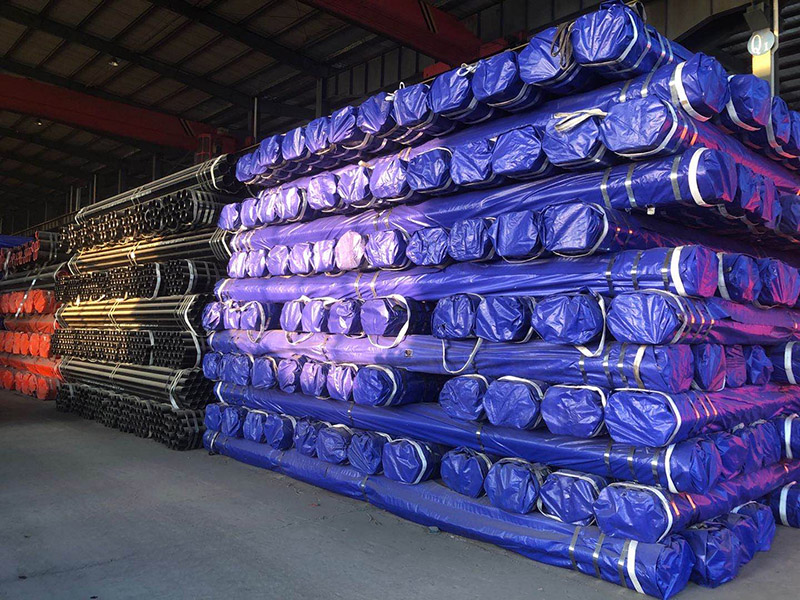

Back in July, high-precision seamless steel tube prices soared continuously due to price speculation. Driven by profits from the packaging and transportation of small-diameter heavy-wall seamless steel tubes, numerous manufacturers of high-precision seamless steel tubes ramped up production recklessly, ignoring production cut requirements and national policies targeting overcapacity. This created an abnormal phenomenon: overall production cuts were mandated, yet actual output went up instead of down.
However, market demand failed to pick up during the traditional peak season. Our company’s market entered a corrective phase, and prices trended downward. Total output from manufacturers of high-precision seamless steel tubes (especially small-diameter heavy-wall variants) subsequently fell rapidly, while production growth of standard seamless steel tubes accelerated markedly.
Overall, over 80% of seamless steel tube producers turned profitable. Although high-precision seamless steel tube prices dropped on weak trading volumes, manufacturers still maintained positive margins. Additionally, after the conclusion of the G20 Summit, manufacturers resumed production rapidly amid expectations of improved demand. Many regions launched strict crackdowns on illegal production of inferior ground steel bars, paired with harsher environmental penalties. Small-scale high-precision seamless steel tube manufacturers saw limited capacity release, while major steel conglomerates faced no such restrictions and posted significantly faster production growth.
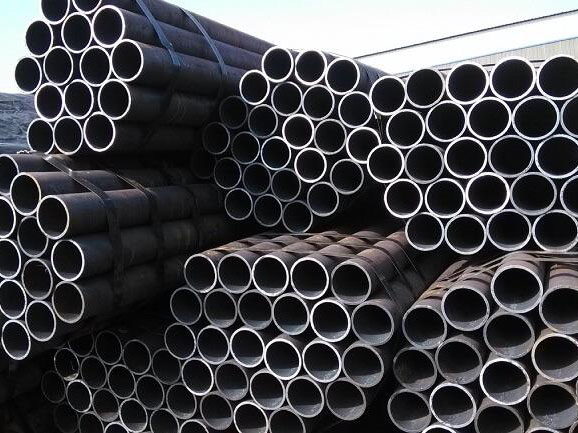
In summary, market demand remains on a downward trajectory. Taking sustained engineering construction projects into account, demand for high-precision seamless steel tubes will gradually recover. Given the weak profit margins of tube manufacturers, widespread production restrictions are highly likely in the medium to long term, with output projected to decline steadily starting from October.
Two core factors must be considered in the cross-section design of heavy-wall steel tubes: cross-section safety and cross-section efficiency.
For cross-section safety, the ratio of web thickness to section height of H-beams shall not be less than 1/45. For H-beams used as columns, efficiency is evaluated via the ratio of radius of gyration to unit mass.
Elastic theory is applicable for calculating static structures such as warehouses, buildings and bridges, yet unsuitable for moving components like wheel hubs, where plastic theory is adopted instead. Research on plastic design theory dates back to 1914. In 1975, the European Convention for Constructional Steelwork issued a plastic design specification, primarily applicable to planar beams under static loads and frame structures subject to bending stress, with the following provisions: more detailed calculations are required for high-rise buildings.
Under dynamic load conditions, shear strength calculations under plastic design theory generally adopt the method of multiplying dynamic loads by a shear safety factor. For members under combined axial load and bending moment, the formula α = Wdynamic / Wallowable can be applied. Replacing elastic calculation methods with plastic methods for strength computation can boost component bearing capacity by 14%.