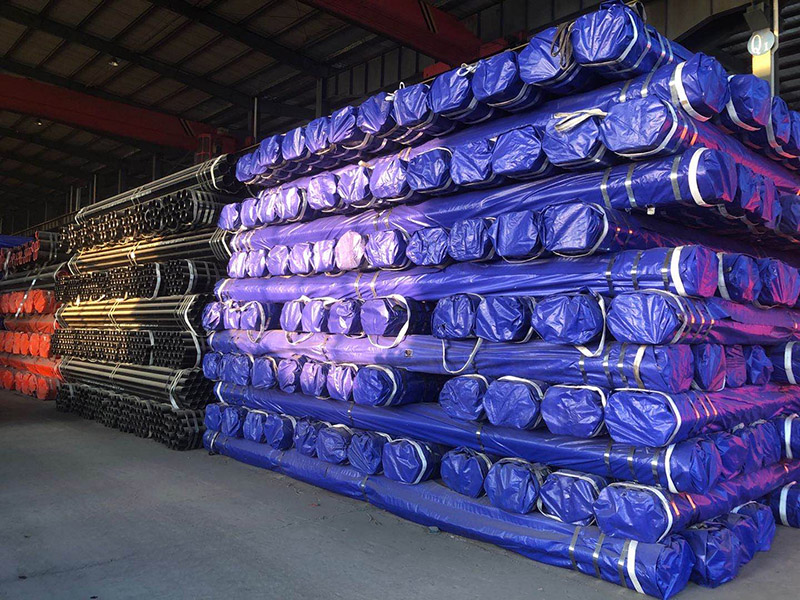

Seamless steel pipes can be used for transporting fluids (such as natural gas, petroleum, water, etc.) and certain solid materials. They are a cost-effective type of steel product. Seamless steel pipes are applied to manufacture structural grids, supports and mechanical bracings in construction. Using seamless steel pipes as building materials helps cut down costs. Today, we have sorted out the differences between seamless steel pipes and welded steel pipes for your reference.
A seamless steel pipe is manufactured by piercing steel ingots or solid tube blanks to form hollow shell blanks, which are then processed via hot rolling, cold rolling or cold drawing. No seams exist on the pipe wall. In contrast, welded steel pipes are produced by bending steel strips or steel plates into round, square or other profiles, followed by welding to form pipe bodies, leaving visible welded joints both on the inner and outer pipe surfaces.
In short, welded steel pipes are formed by welding steel strips together, while seamless steel pipes are hollowed out from solid round steel bars without any welding procedures.
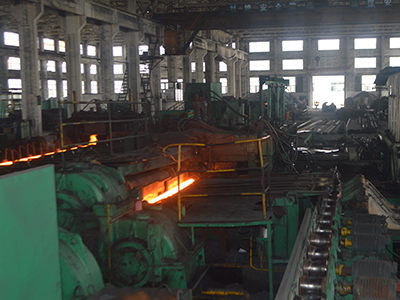
Seamless steel pipes are made of high-quality carbon steel or alloy steel, produced through two main processes: cold drawing and hot rolling. Welded steel pipes are generally formed by welding.
Seamless steel pipes are mainly used as fluid transportation pipelines and structural components, widely applied in the machinery industry. Welded steel pipes are mostly adopted in the construction sector for conveying low-pressure fluids and gases, including water, town gas and compressed air. Pipes bearing high working pressure are generally seamless steel pipes.
Normally, welded steel pipes safely operate under pressures below 20 kg, suitable for low-pressure media like water, gas and compressed air. Seamless steel pipes can withstand ultra-high pressure, though their wall thickness will be increased accordingly based on design pressure requirements. They are widely used in high-pressure pipelines, boiler tubes and other high-temperature and high-pressure equipment. Seamless pipes are also specified for structural applications per design standards.
There are a few types of welded pipes whose weld seams undergo annealing treatment; their allowable pressure range is nearly equivalent to that of seamless pipes and can be adopted as alternatives. Some welded pipes on the market are integrally heated, then drawn or mandrel-rolled to match small seamless pipe dimensions. Though they look seamless externally, their inherent performance is unsatisfactory.
Fabricated by cold drawing and hot rolling, seamless steel pipes are used for working media pressure of 1.6 MPa and above. Welded steel pipes are shaped from steel plates and joined via high-frequency welding, applicable for media pressure below 1.6 MPa.