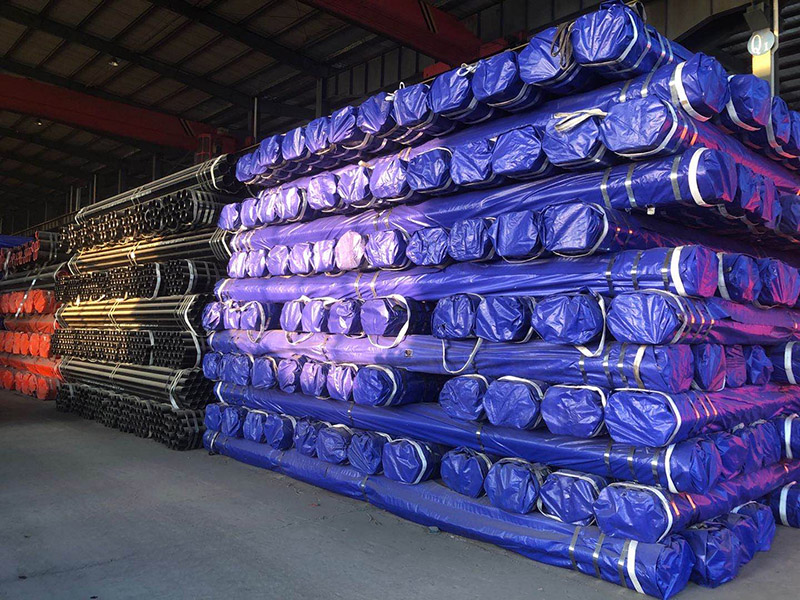

After straightening seamless steel tubes, primary inspection and ash blowing shall be carried out to determine the cutting length of tube heads and tube tails. The purposes of cutting seamless steel tubes are to remove tube ends with cracks, knots, scratches, tears and uneven wall thickness so as to obtain seamless steel tubes of specified fixed lengths. In addition, defects that cannot be retained after inspection such as internal folds, internal scars and severely uneven wall thickness shall be cut off. Generally, the former cutting is completed on the production line, while the latter is processed off-line.
With the growing market demand for seamless steel tubes, the production and processing technologies of such products have been continuously improved, and product varieties keep expanding to adapt to various application scenarios and meet diverse customer demands. Especially for novice purchasers, facing a wide range of steel tube products, they often do not know how to make a selection. To purchase cost-effective and high-quality products, it is necessary to master identification methods and skills.
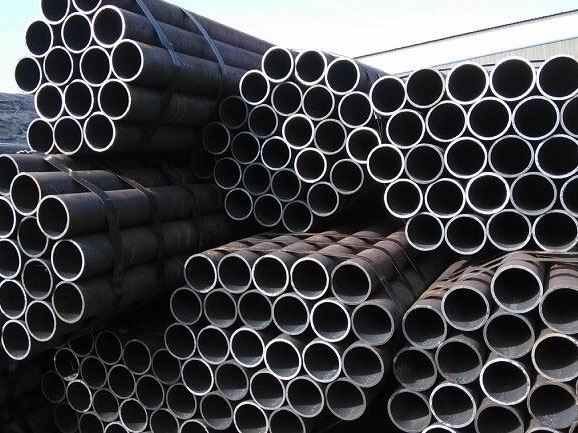
Surface characteristics can be used as a reference for differentiation. Relatively speaking, seamless steel tubes adopt special manufacturing processes during production, which endow them with superior performance, reliable quality and higher hardness. Higher production and processing standards further enhance their overall comprehensive properties.
Relevant material properties should also be taken into account when distinguishing seamless steel tubes from other steel tubes. Different types of steel tubes possess distinct characteristics, hence different identification skills apply.
Spark testing is a method to judge the chemical composition of steel by physical and chemical phenomena generated during grinding. When a steel sample is ground on an abrasive wheel, ground particles fly out along the tangent direction of wheel rotation. At high temperatures, a layer of ferrous oxide (FeO) film forms on the particle surface due to intense oxidation. Carbon in seamless steel tubes readily reacts with oxygen at high temperatures to reduce FeO. The reduced iron will be re-oxidized and then reduced repeatedly.
This cyclic redox reaction continuously generates carbon monoxide (CO) gas. When the iron oxide film on particle surfaces cannot contain the accumulated CO gas, bursting occurs and sparks form. If unreacted iron and carbon remain inside the burst particles, the reaction proceeds, producing secondary, tertiary and multiple bursts of sparks.
Carbon is the fundamental element for spark generation in steel tubes. Alloying elements including manganese, silicon, tungsten, chromium and molybdenum produce oxides that affect the shape, color and morphology of spark streams. The carbon content and other alloy element contents in steel can be roughly judged according to spark characteristics.
During cold drawing of seamless steel tubes, uneven deformation leads to varying deformation degrees from the outer wall to the inner wall. The outer layer undergoes greater additional bending and shear deformation, resulting in a larger total deformation degree than the inner layer. Therefore, the outer layer features finer grains and higher hardness, whereas the inner layer shows the opposite performance.
For tubes with thick walls, high friction coefficients and large die cone angles, the deformation discrepancy between the inner and outer layers becomes more prominent, aggravating the inhomogeneity of microstructure and mechanical properties. Owing to the inconsistent deformation degree of inner and outer walls, the microstructure and service performance differ greatly after drawing.
That’s all for today’s sharing. We will continue to share relevant knowledge in the next issue. See you next time.